

HTTP Header Auth Credentials
HTTP Header Auth credentials allow your SubverseAI agents to authenticate with web services using custom HTTP headers for API access.Overview
HTTP Header Auth provides access to:- Custom header-based authentication
- API key authentication in headers
- Service-specific authentication schemes
- Legacy system integration
- Flexible authentication methods
Dashboard Screenshot
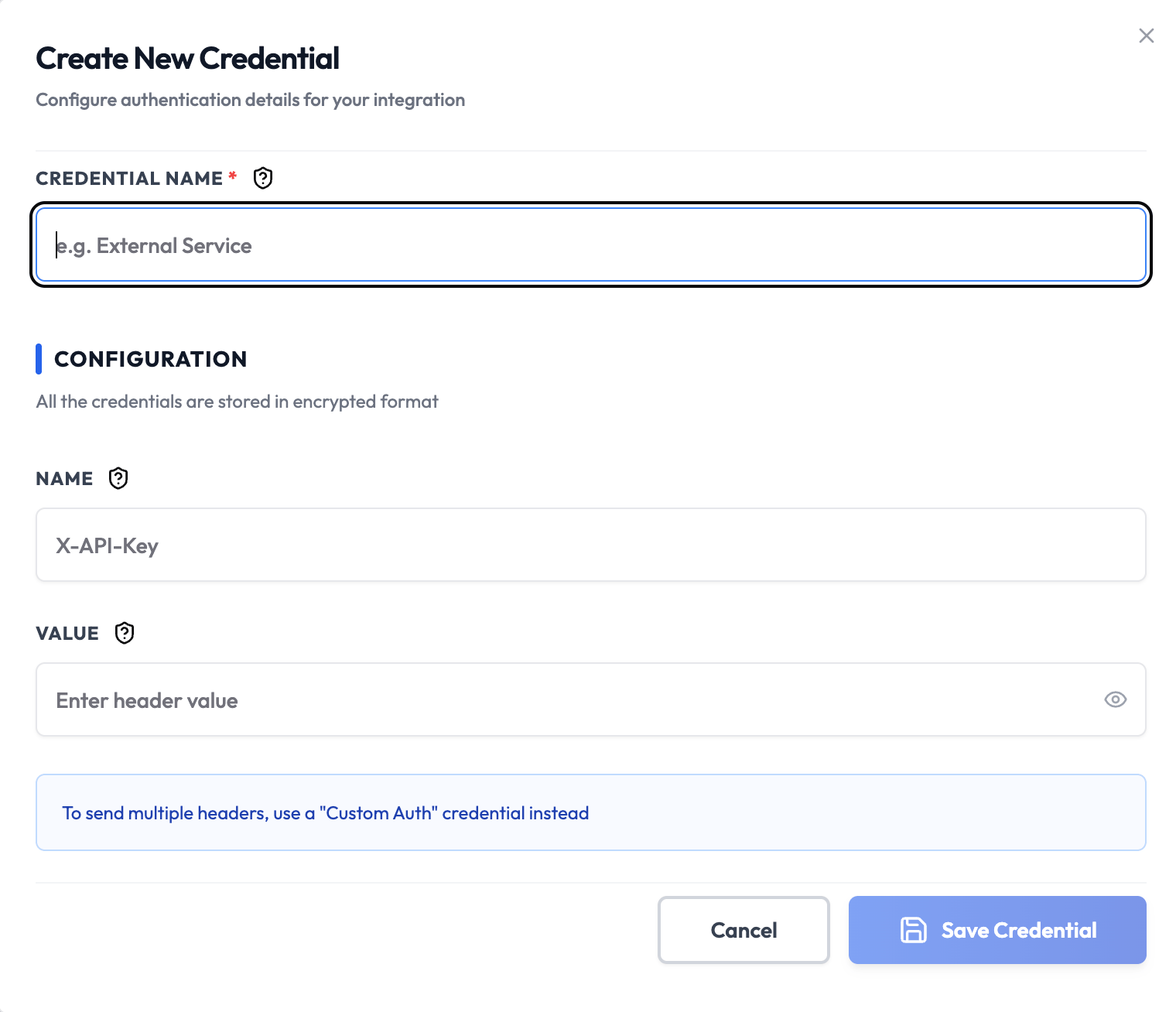
Steps to Create HTTP Header Auth Credentials
1. Identify Header Auth Requirements
Check your API documentation to determine the required header format:- Look for custom header authentication
- Check for API key in headers
- Verify header name and value format
- Note any required prefixes or formats
2. Get Header Authentication Details
From your service provider, collect:- Header Name: The custom header name (e.g., “X-API-Key”)
- Header Value: The authentication value or API key
- Prefix (optional): Any required prefix (e.g., “Bearer ”, “Token ”)
- Additional Headers (optional): Any other required headers
3. Add to SubverseAI
- Go to Credentials in your SubverseAI dashboard
- Click Create New Credential
- Select HTTP Header Auth from the credential types
- Enter a name for your credential
- Fill in the required fields:
- Header Name: Your custom header name
- Header Value: Your authentication value or API key
- Prefix (optional): Required prefix for the header value
- Click Save Credential
Required Fields
- Name: A descriptive name for your credential
- Header Name: Your custom header name
- Header Value: Your authentication value or API key
- Prefix (optional): Required prefix for the header value
Usage Tips
- Use HTTPS endpoints to protect headers in transit
- Follow the exact header format specified in API documentation
- Store API keys securely and rotate regularly
- Use environment-specific credentials for different stages
Troubleshooting
401 Unauthorized: Verify header name and value are correct Missing Header: Ensure the header name matches API requirements exactly Invalid Format: Check for required prefixes or formatting Case Sensitivity: Header names are case-insensitive but values may be case-sensitiveNext Steps
After creating your HTTP Header Auth credentials:- Set up custom header-based API integrations
- Configure service-specific authentication workflows
- Build legacy system connections
- Test different header formats and values
- Monitor authentication success and failure rates